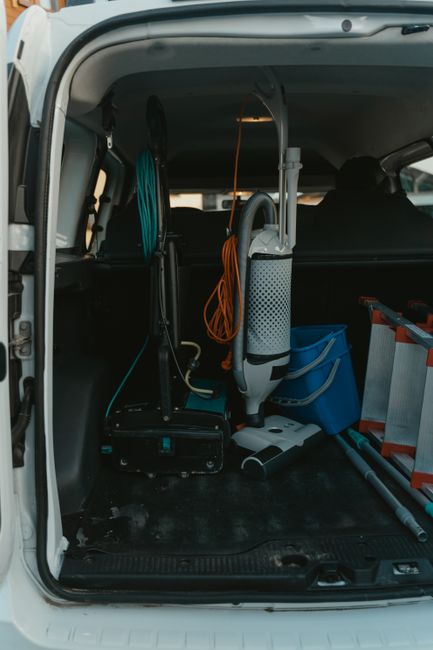
Hidden extra charges to avoid when booking Lambeth cleaning

If you have ever compared two cleaning quotes and thought, "Why is one so much cheaper?", you are not alone. The headline price can look fine, even tidy, and then the extras start creeping in: congestion-style add-ons, parking, stain surcharges, minimum call-out fees, equipment charges, late key collection fees, and the kind of "small" line items that somehow make the final bill feel a lot less small. Hidden extra charges to avoid when booking Lambeth cleaning are usually not hidden in the literal sense; they are just not explained clearly enough upfront.
This guide breaks down the charges that most often catch people out, how to spot them before you book, and how to compare cleaning quotes properly in Lambeth. Whether you are arranging a one-off deep clean, regular domestic help, or a specialist service, the goal is simple: know what you are paying for, what should be included, and what needs to be confirmed in writing before anyone arrives with a vacuum and a friendly smile.
There is a bit of peace of mind in this, too. Once you know the usual traps, booking becomes much less stressful. And let's face it, nobody wants a tense conversation at the front door because the cleaner has just mentioned an extra charge for "awkward access".
Why Hidden extra charges to avoid when booking Lambeth cleaning Matters
The reason this topic matters is straightforward: cleaning is often sold on trust, and trust gets damaged quickly when a final invoice looks nothing like the quote. In a busy area like Lambeth, where flats can have basement access, controlled entry, limited parking, and all the usual London quirks, small assumptions can become extra costs if they are not discussed in advance.
Hidden fees matter for three reasons. First, they make it hard to compare providers fairly. A low opening price can be a marketing hook, not a real total. Second, they can turn a routine job into an awkward negotiation. You should not have to debate whether a single bedroom or a set of stairs counts as "additional labour" once the cleaner is already on site. Third, unexpected charges can lead to rushed decisions. People often accept the uplift because they need the place cleaned that day, or because they are halfway through moving out and the energy has already gone. That is usually when the wallet takes the hit.
There is also a local angle worth mentioning. Lambeth has a mix of Victorian terraces, mansion blocks, modern apartments, student lets, and busy shared homes. Each property type can create genuine pricing differences, but those differences should be explained properly. A fair quote is one that reflects the job, not one that surprises you at the end.
Expert summary: if a quote is vague about access, parking, materials, stain treatment, or minimum time, treat that as a signal to ask more questions before you book. Clear pricing is a service quality issue, not just a money issue.
How Hidden extra charges to avoid when booking Lambeth cleaning Works
Most cleaning companies work in one of three ways: fixed-price quotes, hourly pricing, or a hybrid model. Hidden extra charges usually appear where the quotation terms are thin, or where the service scope has not been pinned down properly. In plain English, the quote may only cover the "base clean", while everything else is billed as an extra.
Here is how that tends to happen in real life. You request a cleaner for a one-bedroom flat. The quote assumes standard access, normal dirt levels, and enough time to finish within a certain window. Then the property turns out to need extra attention because of pets, heavy limescale, or a sofa that has to be moved. Or there is no parking nearby, so the cleaner needs to pay for a bay or spend time circling the block. None of that is necessarily unreasonable. The problem is when these items are not stated clearly before you agree.
Some companies use add-ons as a legitimate way to price variable work. That is fair enough. The key question is whether they explain the structure up front. If they do, great. If they do not, you end up guessing. Guessing is expensive.
A practical way to think about it is this: a cleaning quote should answer five questions. What is included? What counts as extra? How is time measured? Are supplies provided? What happens if the job is more complex than expected? If those answers are missing, there is a good chance the final bill will wander away from the original number.
Common types of extra charges
- Access charges: extra fees for stairs, no lift access, long carries, or difficult entry.
- Parking-related costs: parking permits, pay-and-display costs, or waiting time where parking is limited.
- Heavy-duty cleaning surcharges: for thick grease, mould, pet mess, or very neglected rooms.
- Stain or spot treatment add-ons: especially for carpets, upholstery, or mattresses.
- Minimum booking fees: a set charge if the job is short but the company has a minimum call-out threshold.
- Supply or equipment charges: if specialist products, steam machines, or ladders are needed.
- Key collection or return fees: sometimes added for jobs where access is arranged remotely.
- Weekend or late-booking premiums: common enough, but they should be obvious.
One more thing: the words used on the quote matter. "From GBPX" and "subject to inspection" do not mean the same thing as a confirmed total. A decent quote is more precise than that.
Key Benefits and Practical Advantages
Learning to spot hidden cleaning charges gives you more than just savings. It also makes the whole booking process calmer and more efficient. You can compare companies on equal terms, set expectations correctly, and avoid the slightly awkward feeling of discovering the true cost after the mop bucket has gone back in the van.
Here are the practical advantages that matter most:
- Better budgeting: you know the likely final cost before you commit.
- Fairer comparisons: quotes become easier to compare because you are looking at the same scope.
- Less admin stress: fewer back-and-forth calls once the job has started.
- Cleaner outcomes: when the scope is clear, the work is usually better focused.
- Stronger trust: transparent pricing tends to reflect a more professional operation overall.
There is also a subtle but important benefit: clearer pricing often improves service quality. If a provider takes the time to explain extras, they are usually thinking carefully about the job itself. Not always, but often enough to be worth noticing.
For customers arranging repeat visits, transparency helps even more. Regular cleaning should become easier over time, not a monthly mystery. If you are dealing with a recurring service, ask how occasional extras are authorised so you are never surprised by a one-off uplift.
Who This Is For and When It Makes Sense
This topic is useful for almost anyone booking domestic or specialist cleaning in Lambeth, but it matters most for people whose properties have a few variables. If your home is a top-floor flat, a conversion with narrow stairs, or a place where parking is a small adventure in itself, pricing details matter from the start.
It is also especially relevant if you are:
- booking after a tenancy ends and need a full end-of-tenancy clean;
- arranging carpet or upholstery cleaning where stain levels vary;
- trying to compare several quotes quickly;
- working to a moving date and need the bill to stay predictable;
- managing a shared house where access, keys, and room counts can get muddled;
- buying cleaning for a relative and want everything easy to understand.
If you are a landlord or letting agent, this becomes even more important. A job that looks simple on paper can become complicated fast when inventory standards, fixtures, and access arrangements all come into play. The same goes for commercial or communal spaces, though the pricing logic may be a bit different.
Truth be told, if you dislike surprises on invoices, this guide is for you. That is the short version.
Step-by-Step Guidance
Here is a practical way to avoid hidden charges before they become your problem.
- Start with the property reality, not the ideal version. Count rooms accurately, note stairs, lifts, parking limits, pet hair, stained areas, and anything awkward to access. A cheerful estimate like "it's just a quick clean" is often where misunderstandings begin.
- Ask what is included in the base quote. Make sure you know whether materials, labour, vacuuming, dusting, kitchen degreasing, bathroom descaling, and bin emptying are in the standard price or not.
- Ask directly about common extras. Parking, congestion-style access issues, extra bathrooms, large appliances, balcony cleaning, and heavy stain treatment should be discussed before booking.
- Check whether the quote is fixed or estimated. A fixed quote usually gives you more certainty. An estimate can still be useful, but only if you understand the conditions that might change it.
- Request examples of what would trigger a surcharge. This sounds simple, but it is one of the best questions you can ask. The answer tells you a lot about how the company works.
- Confirm the time basis. If the company charges by the hour, ask how they handle overruns. If it is fixed-price, ask whether there is any inspection-based adjustment.
- Get the key details in writing. Email, message, or quote notes all help. You do not need a legal document for every booking, but you do want a record.
- Review the terms before paying a deposit. If deposit terms, cancellation rules, or rescheduling fees are not clear, pause and ask.
A small real-world example: someone books a Saturday carpet clean for a ground-floor flat and gets a sensible base quote. On arrival, the cleaner discovers a heavily soiled hallway runner, no nearby parking, and a request to treat wine stains in the lounge. None of that is outrageous, but if it was never discussed, the final price can jump enough to sting. A five-minute conversation before booking would have solved most of it.
If you want to compare service terms and quote expectations more carefully, take a look at the company's pricing and quotes information and read the terms and conditions before confirming anything.
Expert Tips for Better Results
Over time, you start noticing the little clues that separate a transparent quote from a slippery one. It is not always about price. Sometimes it is about how the provider answers the question.
Here are a few tips that genuinely help:
- Ask for a scope summary, not just a price. A fair price without a clear scope is half a quote.
- Watch for vague wording. Phrases like "additional charges may apply" are not bad in themselves, but they should be followed by examples.
- Clarify parking and access before the appointment. In London, this is not a minor detail. It can make or break the pricing.
- Be specific about stain types. Coffee, red wine, grease, pet accidents, and limescale are not the same thing.
- Ask whether supplies are included. Some companies bring everything; others do not. No shame either way, but you need to know.
- Check if the quote assumes standard condition. "Standard condition" can be a useful phrase, but it is also a bit elastic. Pin it down.
- Keep photos handy if you are booking remotely. A few clear images of the worst areas often reduce pricing disputes later.
A slightly old-fashioned tip, but still useful: trust the person who is willing to be boringly specific. The detailed answer is often the honest one. Not always. But often.
If you are concerned about payment safety when booking online, it is sensible to read the company's payment and security information before entering card details.
Common Mistakes to Avoid
Most pricing headaches come from a handful of predictable mistakes. The good news? They are easy to avoid once you know what to look for.
- Choosing the cheapest quote without checking the scope. Cheap can be fine. Cheap plus vague is where problems begin.
- Assuming every cleaner includes the same things. They do not. Not even close.
- Forgetting to mention stairs, parking, or access codes. These details feel small until they are charging time.
- Using vague language like "whole flat" or "basic clean". That gives too much room for interpretation.
- Ignoring minimum charges. A short job can cost more than expected if the provider has a minimum visit fee.
- Not asking about specialist treatment. Carpet spotting, oven cleaning, mould work, or upholstery care often sit outside standard pricing.
- Leaving questions until the cleaner arrives. That is usually too late. Tense, too.
One of the most common issues is the assumption that "final price" means exactly that. In practice, some providers mean "final price if the job matches the description". That is reasonable only if the description was thorough. If it was not, the gap becomes your problem.
Another easy mistake is not checking cancellation or rescheduling terms. Life happens. Trains run late, children get ill, keyholders forget things. If a company charges heavily for short-notice changes, you should know that before you book.
Tools, Resources and Recommendations
You do not need specialist software to avoid hidden cleaning charges. A simple, organised approach works best. A notes app, a phone camera, and a checklist are often enough.
Useful things to prepare before requesting a quote
- a rough room list;
- photos of the main spaces;
- notes about parking or access;
- special requests, such as stain treatment or pet hair removal;
- your preferred date and whether the timing is flexible;
- any building rules that affect entry or equipment use.
It also helps to keep the company's policy pages to hand if you want to understand how they work. For example, you can review their about us information to get a sense of the business, and their insurance and safety details if you want extra reassurance about the way jobs are handled.
If you are dealing with a sensitive property, a landlord handover, or a clean that involves more than one person in the home, it can also be worth checking the company's health and safety policy. That will not tell you everything about pricing, obviously, but it does help you judge professionalism.
And if you ever need to ask a very specific question, there is no harm in using the contact page rather than guessing. A quick message can save a lot of invoice drama later on.
Law, Compliance, Standards, or Best Practice
This is not a legal deep dive, and it should not be treated as legal advice. Still, there are a few sensible UK best-practice points that matter when you are booking cleaning services. Pricing should be transparent enough for you to understand what you are buying. Terms should be available before you commit. And if money is taken online, payment handling should be secure and explained clearly.
For cleaning businesses, good practice usually means making the quote process clear, distinguishing between included work and chargeable extras, and avoiding vague promises that cannot be supported. That is especially relevant where access, parking, specialist chemicals, or extra labour are involved. A customer should not have to decode the invoice like it is a puzzle.
There are also wider ethical and operational standards worth noticing. Many customers value responsible working practices, clear complaint handling, and respect for privacy and safety. If those things matter to you, it can be helpful to read supporting pages such as the company's complaints procedure and privacy policy. These pages are not about hidden charges directly, but they tell you how seriously a business takes clarity and customer care.
If sustainability matters in your household, you may also want to see how the company approaches waste and materials on its recycling and sustainability page. Not every booking needs that level of detail, but it is a useful trust signal.
Options, Methods, or Comparison Table
When comparing cleaning quotes, the real question is not simply "which is cheapest?" It is "which quote is most complete for the same job?" That distinction saves people money all the time.
| Pricing approach | How it usually works | Pros | Risk of hidden extras |
|---|---|---|---|
| Fixed quote | One agreed price for a defined scope | Predictable, easier to budget | Lower if the scope is detailed; higher if the scope is vague |
| Hourly rate | You pay for time spent on the job | Flexible for unusual jobs | Can creep up if the job is larger than expected |
| Base price plus add-ons | Starting price with extras for specific tasks | Can be fair for variable properties | High if add-ons are not clearly listed |
| Inspection-based quote | Final price confirmed after viewing the property | Good for complex or larger properties | Moderate, depending on how much changes after inspection |
In practice, fixed quotes are often the easiest for customers because they reduce uncertainty. Hourly pricing can be perfectly fair too, but only if the provider is good at estimating time and explaining what would change the total. Base-plus-add-on models need the most attention, because they are the place where hidden charges tend to hide in plain sight.
Case Study or Real-World Example
A renter in Lambeth was preparing for a move-out clean in a two-bedroom flat. The first quote looked attractive: a very neat headline price, no fuss, quick response. Then the details emerged. There was an extra charge for top-floor access, another for stained carpet spots in the hall, and a separate line for parking because the street was restricted in the evening. By the time everything was added, the "great deal" was not so great.
The renter then asked a second provider for a more detailed quote. This time they supplied photos, listed the number of rooms, noted the lack of lift, and mentioned the likely carpet stains upfront. The revised quote was a little higher at the start, but it included the likely extras. No surprise fee at the end. No awkward discussion. Just a cleaner, calmer handover.
That is the practical lesson: the best quote is not always the lowest quote. It is the clearest one.
And honestly, if you have ever been stood in a hallway with moving boxes everywhere, the last thing you want is a pricing debate. The kettle is already packed. Your patience may be gone. Keep it simple where you can.
Practical Checklist
Use this checklist before confirming a cleaning booking in Lambeth.
- Have I described the property accurately?
- Have I listed stairs, lifts, and access details?
- Have I mentioned parking restrictions or permit needs?
- Do I know exactly what is included in the quoted price?
- Have I asked about stain treatment, heavy dirt, or pet-related cleaning?
- Do I know whether supplies and equipment are included?
- Have I checked whether the quote is fixed, estimated, or hourly?
- Do I understand any minimum charge or call-out fee?
- Have I read the terms on cancellation and rescheduling?
- Have I saved the quote or confirmation in writing?
If you can tick all of those off, you are in a much stronger position. Not perfect, maybe, but solid.
Quick takeaway: the more precise your questions, the fewer surprises you get later. That alone can save a surprising amount of money.
Conclusion
Hidden charges are rarely mysterious once you know where to look. They usually come from vague scopes, unclear access assumptions, parking issues, specialist treatments, or pricing models that do not explain the full picture. The fix is simple enough, though not always glamorous: ask better questions, get the details in writing, and compare quotes on the same basis.
If you are booking Lambeth cleaning for a home, tenancy move, or specialist job, transparency should be part of the service, not an optional extra. A provider that explains the price clearly is giving you a good sign from the start. That trust matters. In a city as busy as London, it really does.
Get a free quote today and see how much you can save.
And if you are still weighing up your options, take your time. The right booking should feel clear, calm, and properly explained. That is the good stuff.
Frequently Asked Questions
What are the most common hidden extra charges when booking Lambeth cleaning?
The most common ones are parking costs, extra labour for stairs or awkward access, stain treatment, supply fees, minimum call-out charges, and premiums for weekends or short notice. These are not always unreasonable, but they should be explained before you agree to the booking.
How do I know if a cleaning quote is genuinely fixed?
A genuine fixed quote should spell out what is included, what is excluded, and what would trigger a change in price. If the provider only says "from" or "subject to inspection", ask for more detail. A fixed quote without a clear scope is not very fixed at all.
Should parking always be included in the price?
Not necessarily. In many London areas, parking can vary by street, time of day, and permit rules. What matters is whether the company tells you how parking is handled. If there is likely to be a cost, it should be mentioned early.
Why do some Lambeth cleaning prices look much lower than others?
Often the lower price reflects a narrower service scope, a shorter booking window, or a quote that does not yet include common extras. That does not mean the company is bad, but you should check what the price actually covers before assuming it is the better deal.
Can cleaners charge extra if the property is dirtier than expected?
Yes, that can happen if the quote was based on standard condition and the job turns out to require extra time or specialist treatment. The fair approach is for the provider to explain that possibility before booking and to tell you what kind of condition would change the price.
Is hourly cleaning more likely to lead to surprise costs?
It can, especially if the job takes longer than expected. Hourly pricing can be fair and transparent, but you need to know how time is tracked and what happens if the cleaner needs extra time because of heavy dirt, access issues, or additional rooms.
What should I ask before booking a deep clean?
Ask what tasks are included, whether internal appliances are covered, whether limescale or grease treatment is extra, and whether supplies are provided. Deep cleans vary quite a lot, so the quote should be more specific than a standard tidy-up booking.
How can I avoid disputes over extra charges after the clean?
Describe the property honestly, ask for exclusions and add-ons in writing, and confirm any special conditions before the appointment. If possible, keep photos and the quote together. A few minutes of prep can prevent a long conversation later.
Do I need to read the terms and conditions before booking?
Yes, especially if you care about cancellation fees, rescheduling rules, deposits, or how additional work is approved. The terms do not have to be thrilling reading, but they can stop an expensive misunderstanding.
What if I think I have been charged unfairly?
Start by checking the quote, the notes you exchanged, and the terms you accepted. If something still looks wrong, raise it calmly and ask for a breakdown. If the company has a complaints process, use it. Clear records usually help far more than memory.
Are supply charges normal for cleaning services?
They can be, especially for specialist products or equipment. The important part is that the charge is explained in advance. If a company expects you to supply materials or pay extra for theirs, that should not be a surprise.
Should I choose the cheapest cleaner if I am trying to save money?
Not on price alone. A cheaper quote is only good value if it includes the same work and terms as the others. In practice, the clearest quote is often the best one, even if it is not the lowest number on the page.